From vehicle telematics to the city's digital twin. Eusebiu Catană's contribution to European mobility research
At ROPAT 2026, the National Public Transport Congress, Eusebiu Catană presented the case of the Dutch city of Almelo. Using a digital twin, the local administration can simulate the closure of a section of road and estimate how traffic would be redistributed and how emissions would change on neighbouring streets. The Romanian engineer coordinates at ERTICO the European project 3DxVERSE, dedicated to developing interoperable local digital twins.
21 November 2026 · Source: Știri Smart
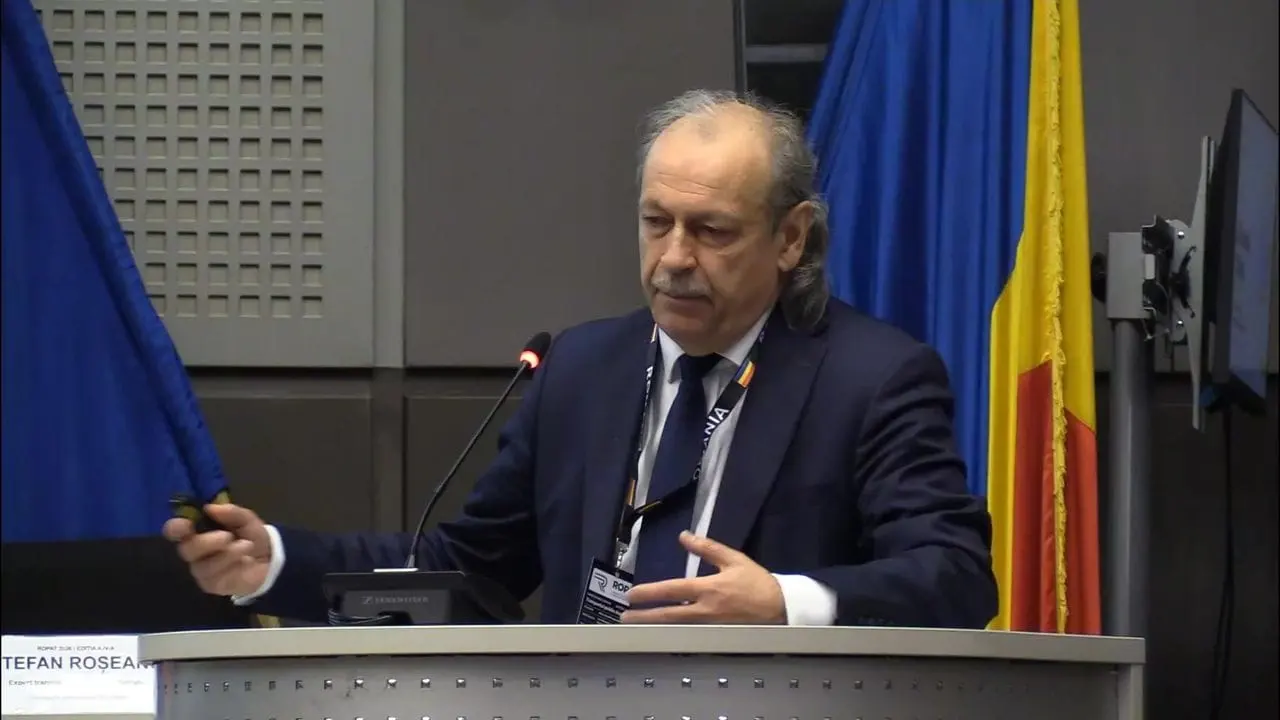
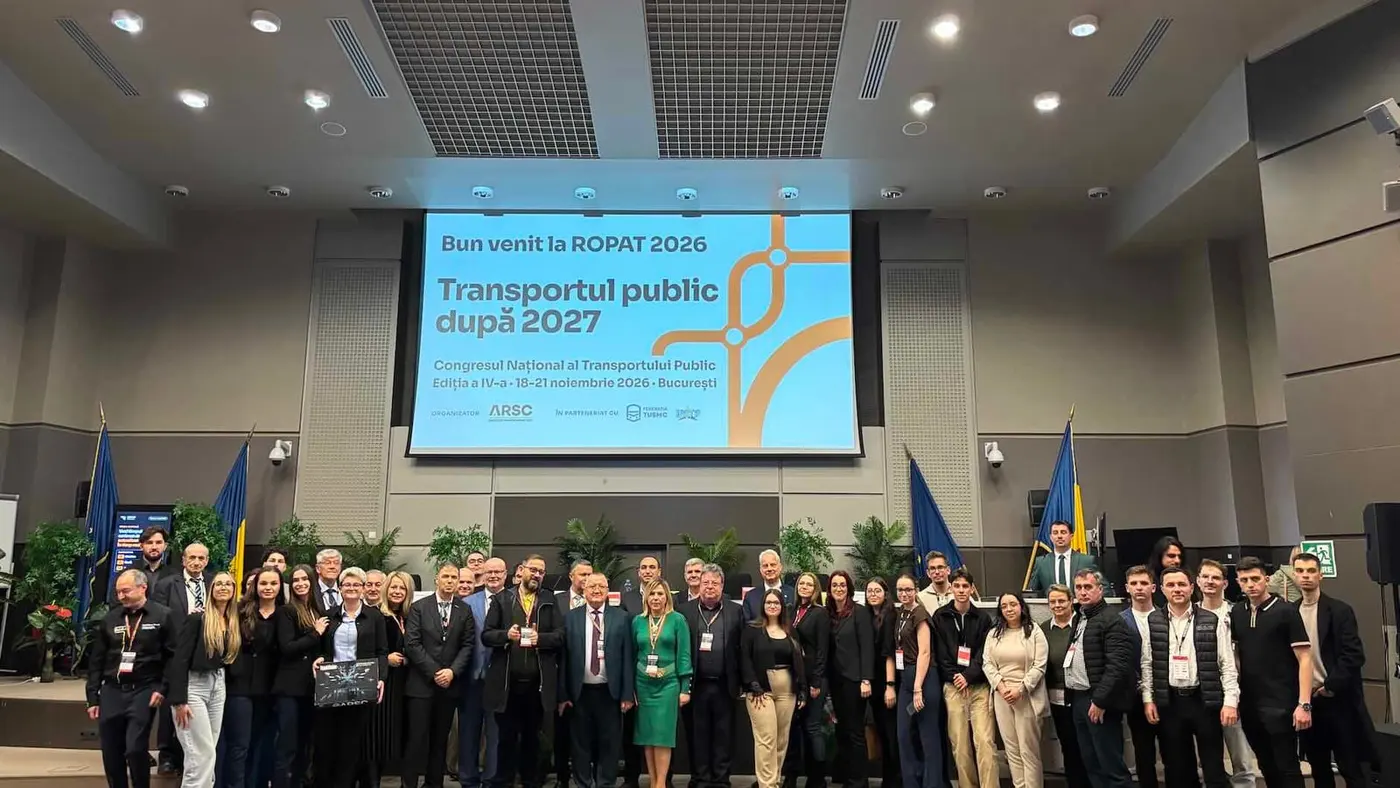
What happens to traffic and emissions on neighbouring streets if a city closes a section of road? At ROPAT 2026, the National Public Transport Congress, Dr Eusebiu Catană presented the case of the Dutch city of Almelo, where such a question can be examined in a digital model before the administration intervenes on the street. For the Romanian engineer at ERTICO - ITS Europe, coordinator of the European project 3DxVERSE, the scientific value of a model is also judged by the quality of the public decision it can support.
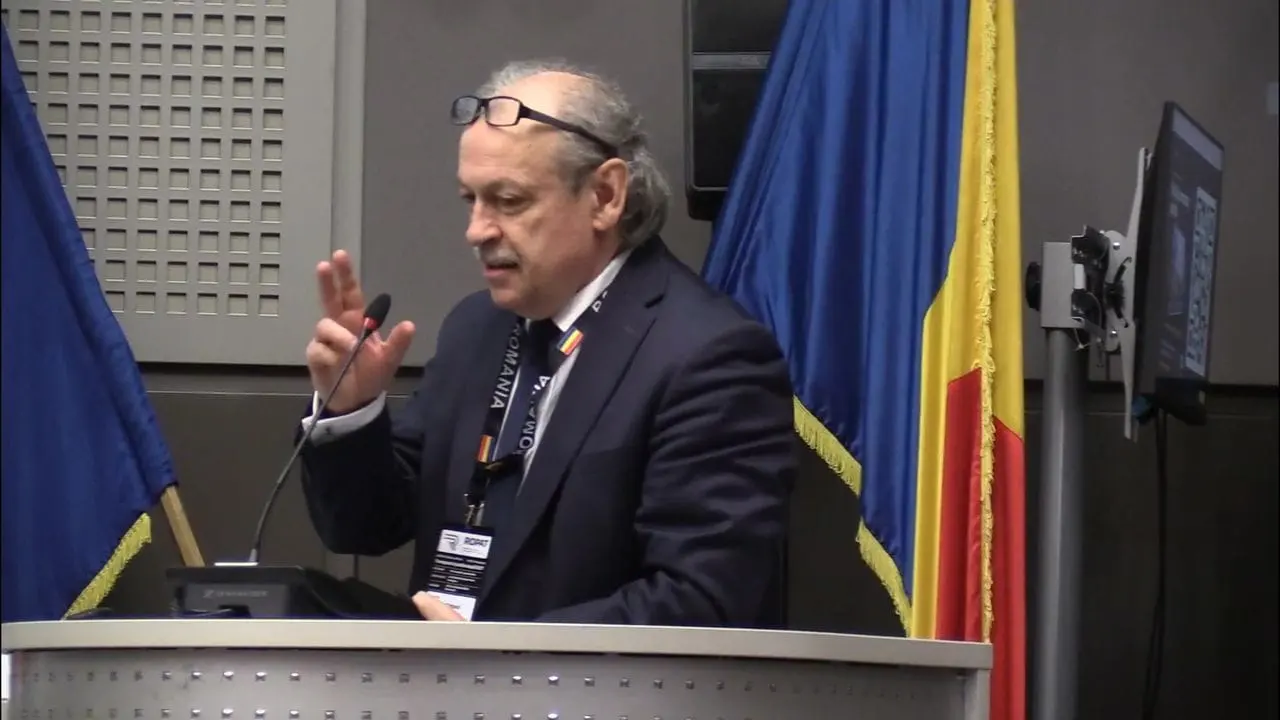
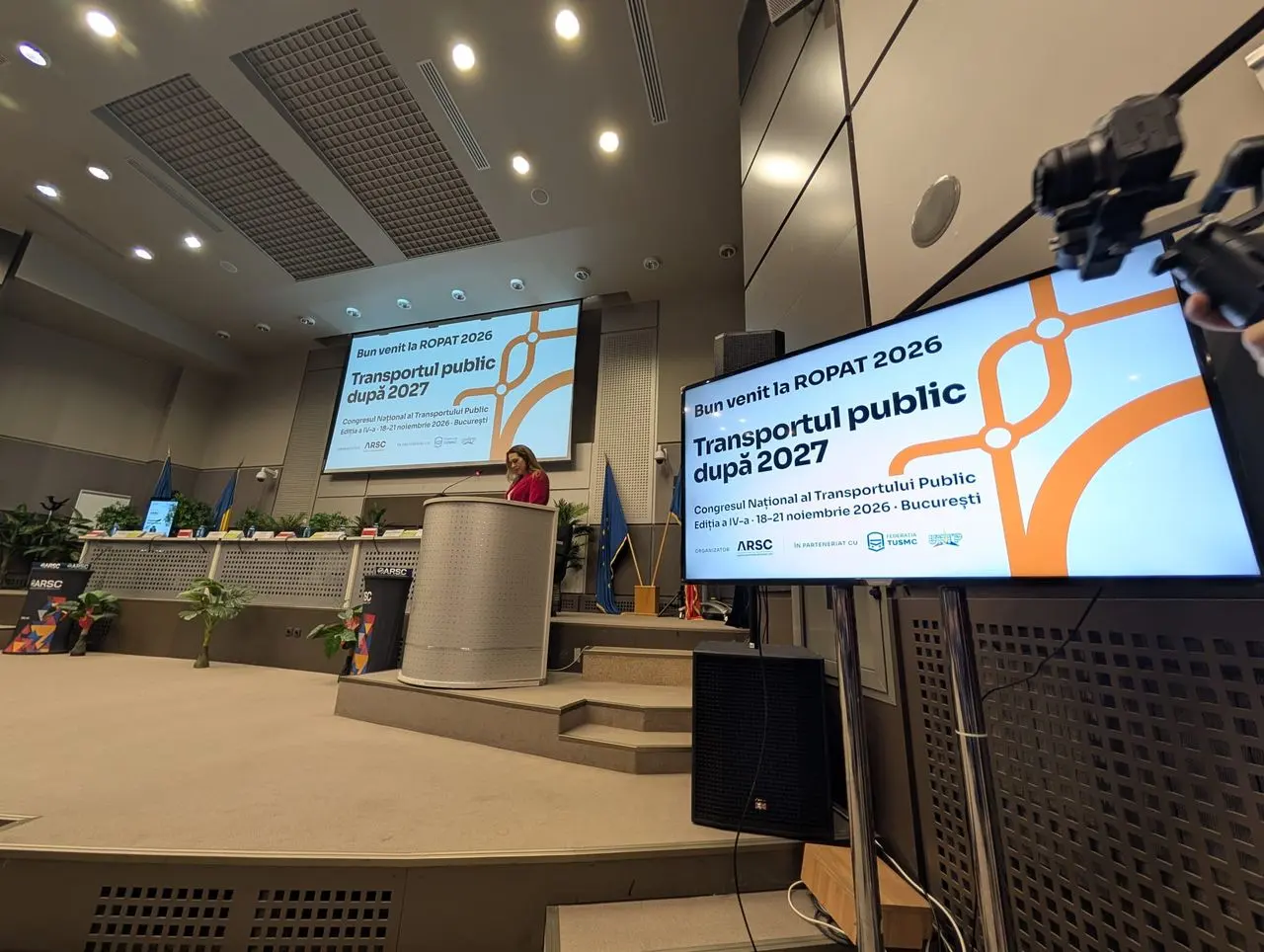
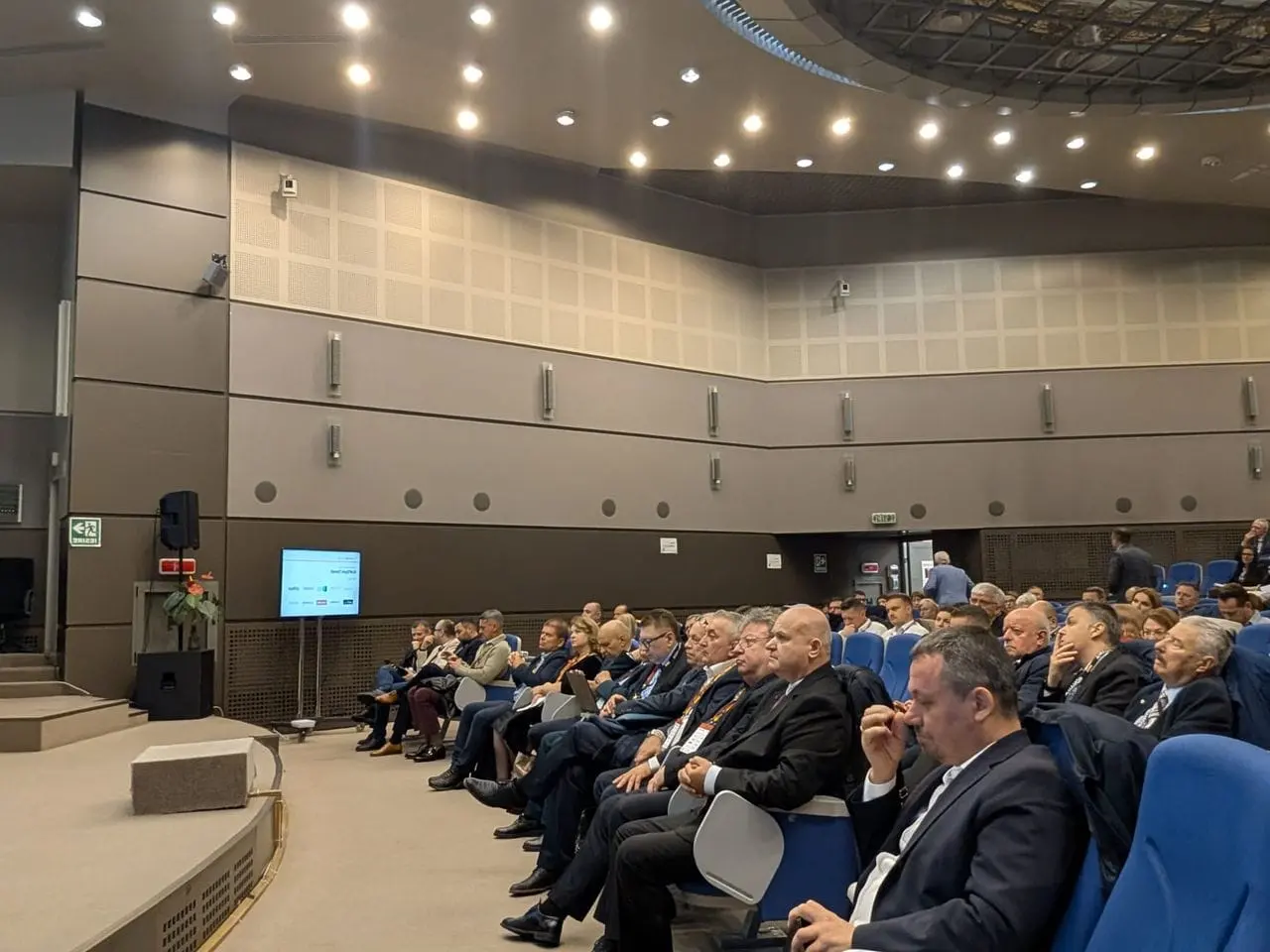
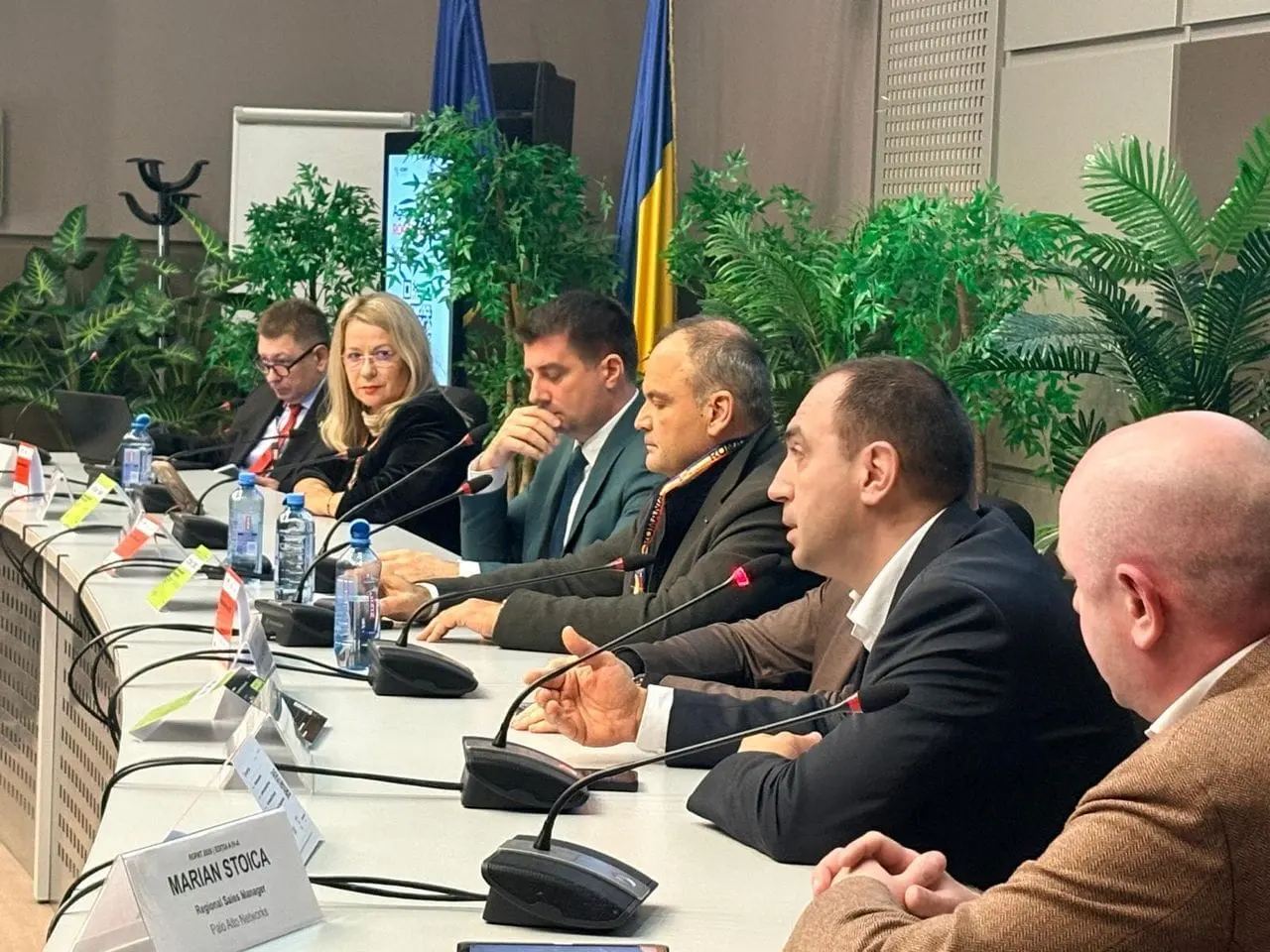
In Bucharest, on 19 November, Eusebiu Catană began his talk by returning to a few observations he had noted down during the debate between operators. The discussion on autonomous vehicles had raised the issue of their authorisation. The one on metropolitan services had raised the issue of compatibility between the systems used in different cities. In both he recognised difficulties familiar to European research: who sets the requirements, how do you verify that a technology meets a real need, and who will use it once the funding ends?
An international engineering education
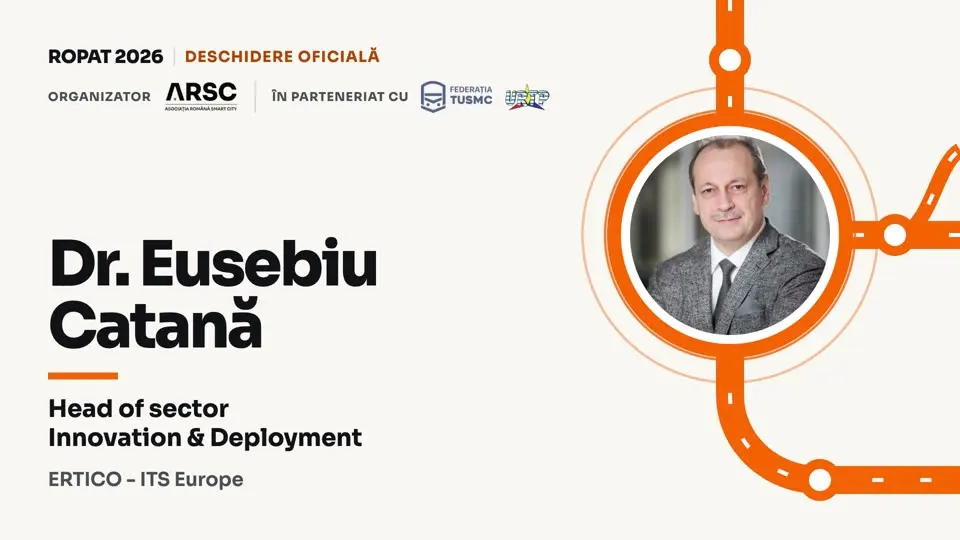
Eusebiu Catană studied in five countries and holds a doctorate in vehicle telematics, the field that studies how a vehicle collects, transmits and uses information. His training brings together automotive engineering, industrial management, and the modelling and simulation of intelligent transport systems. He has worked with three-dimensional driving simulators, computer vision systems and connected transport platforms. In 2002 he received a European award for the use of XML technology in the development of intelligent transport systems. He joined ERTICO in 2017.
There is an intellectual continuity between that award and the research he coordinates today. At the scale of a vehicle, the problem is how to interpret a signal. At the scale of a city or a logistics corridor, the difficulty grows: the data come from different institutions, are produced for different purposes and must mean the same thing to everyone who takes a decision based on them.
In AEOLIX, a project coordinated by Eusebiu Catană, 12 labs tested logistics data exchange solutions in real-world conditions. In FENIX, which he also coordinated, the partners developed a federated European architecture for logistics data exchange. The federated approach has a practical consequence: carriers, infrastructure managers and authorities can share information through interoperable systems while keeping their own platforms. It is a problem familiar to any city in which the transport operator, the port and the traffic centre use different systems.
A distinct academic contribution is the study Governing digital transformation in ports: Policy learning from the 5G-LOGINNOV project, of which Eusebiu Catană is first author, published in the journal Open Research Europe together with Francesca Merlo and Guido Perboli (the scientific study). The research draws on workshops, interviews and surveys carried out in three port labs, in Athens, Hamburg and Koper. The authors examine what enables the move from a successful technical trial to its adoption by institutions with different responsibilities and interests. They identify infrastructural, regulatory and organisational obstacles and propose a method by which the results of pilot projects can be compared and used in public policy.
What an administration can learn from a digital twin
In the session devoted to the European CitiVerse initiative, the researcher described the autonomous vehicle as “a pixel that moves”. Viewed as a whole, however, a fleet offers far more than the positions of vehicles on a map. It can function as a sensor network describing journeys, congestion and incidents. When these observations are related to the street network and a traffic model, the administration can compare several versions of the same decision.
This is one of the areas of the 3DxVERSE project, coordinated by Eusebiu Catană at ERTICO. In the demonstration presented in Bucharest, the researcher used the example of the city of Almelo to illustrate the simulated effects of closing a section of road: the road network is altered in a simulation scenario, and the distribution of traffic and emissions is recalculated. For a mayor or a traffic engineer, the decisive question is where the effect of the intervention moves to. One street may become quieter while a neighbouring district takes on the diverted traffic. The model makes it possible to examine this hypothesis before the works begin. The result remains an estimate that must be checked against observations on the ground. The European project 3DxVERSE · Eusebiu Catană's role as coordinator
In Hamburg, the port changes the scale of the analysis. Freight flows meet the journeys of residents, and passenger transport includes river and sea links. Eusebiu Catană showed how dynamic data can reach the traffic management centre and insisted on responsibility for maintaining the model after the project ends. Another example from the presentation, Cartagena, started from a very precise requirement of the municipality: on a scorching day, a visitor should be able to identify the parts of a route where they can find shade. The public purpose pursued changes both the data needed and the way the model is built.
How research transfers from one city to another
One of the most important questions of the talk concerned the transfer of results. What does a second city actually receive when it wants to use an application demonstrated in the first? Eusebiu Catană listed the technical documentation, the specifications, the data models and the standards through which systems communicate. In 2026 the European Commission presented the consolidated, open-source version of the EU Local Digital Twin Toolbox, a tool intended for administrations that develop and adapt such solutions.
For Romania, the researcher issued a concrete invitation. After describing the autonomous mobility test area in Hamburg, he proposed setting up a similar area in Bucharest or another Romanian city. He asked interested operators to get involved from the stage of defining the project and recalled the experience of a 2021 proposal to test autonomous shuttles on a Bucharest campus. According to his account, the approvals came after the project deadline, and the testing moved to a campus in Greece.
This is where Eusebiu Catană's professional biography and his argument at ROPAT meet. Having coordinated European projects large enough to bring together ports, cities, universities and operators, the Romanian researcher keeps his attention on a question any beneficiary can ask: who will be able to use the result, and in what circumstances? The experience of the project proposed in 2021 explains why Eusebiu Catană calls for operators to be involved from the outset. To test autonomous shuttles on a campus, a consortium needs a test site, approvals obtained on time and a partner able to use the result after the funding ends.
Photo gallery
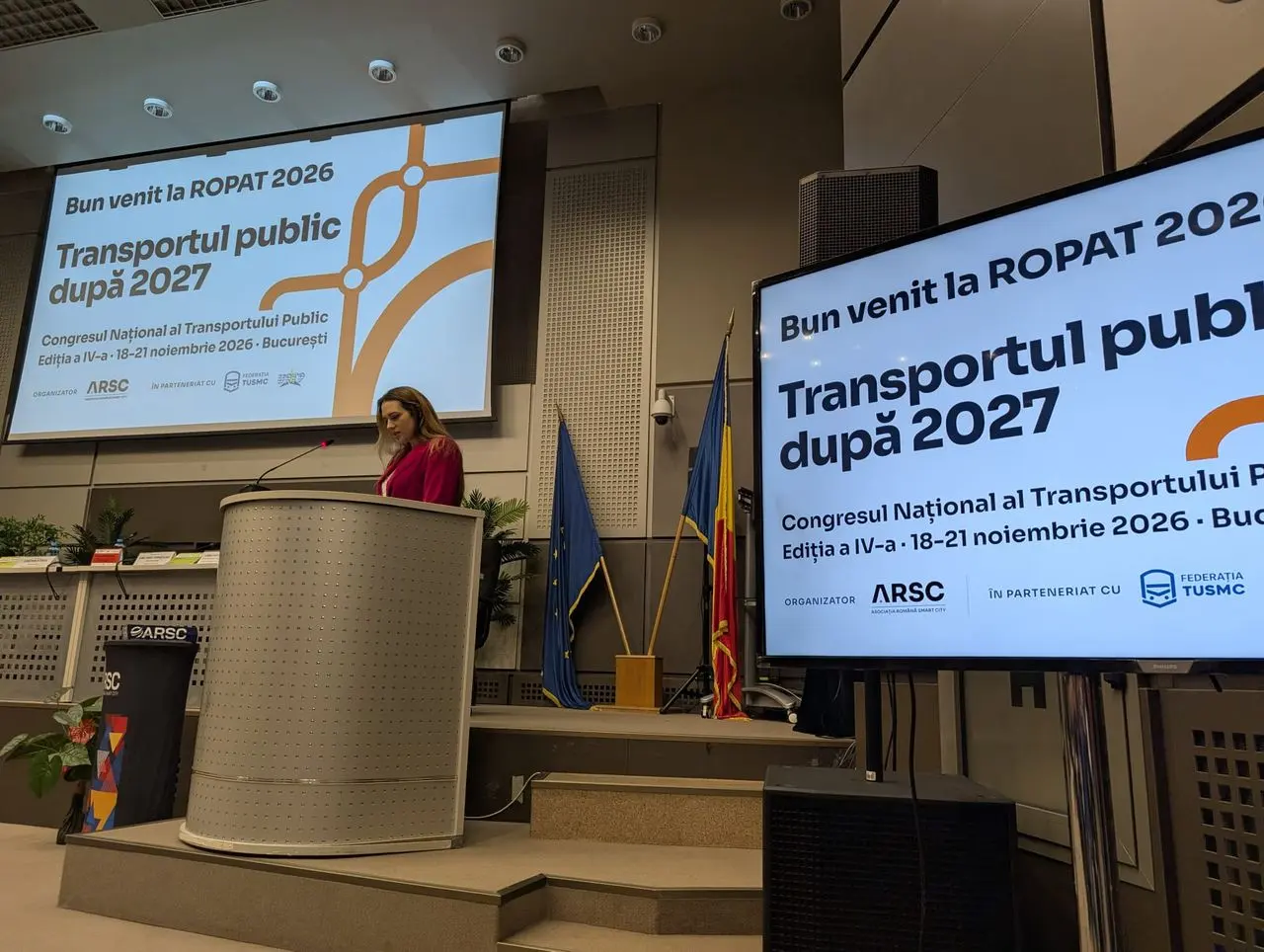
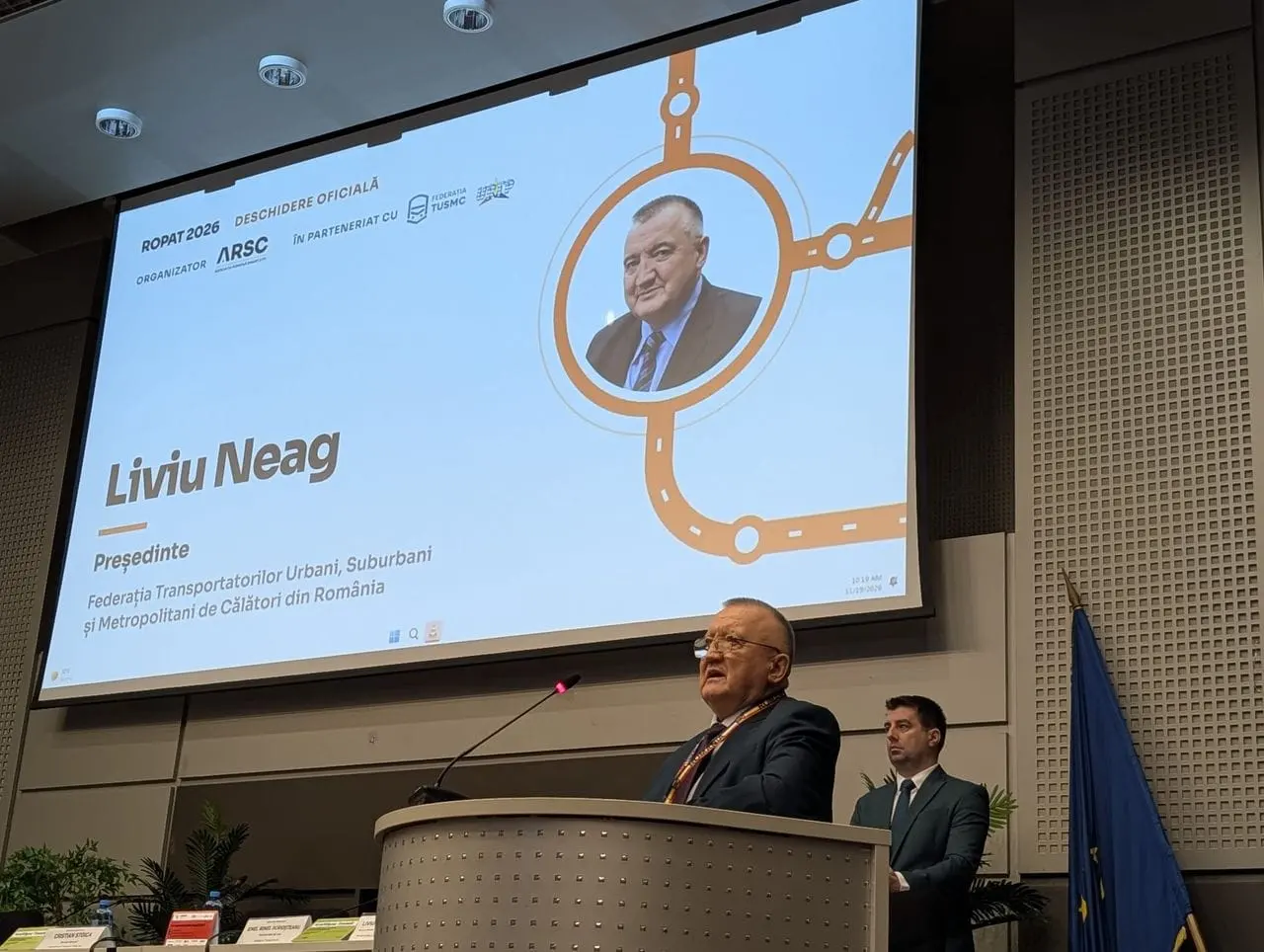
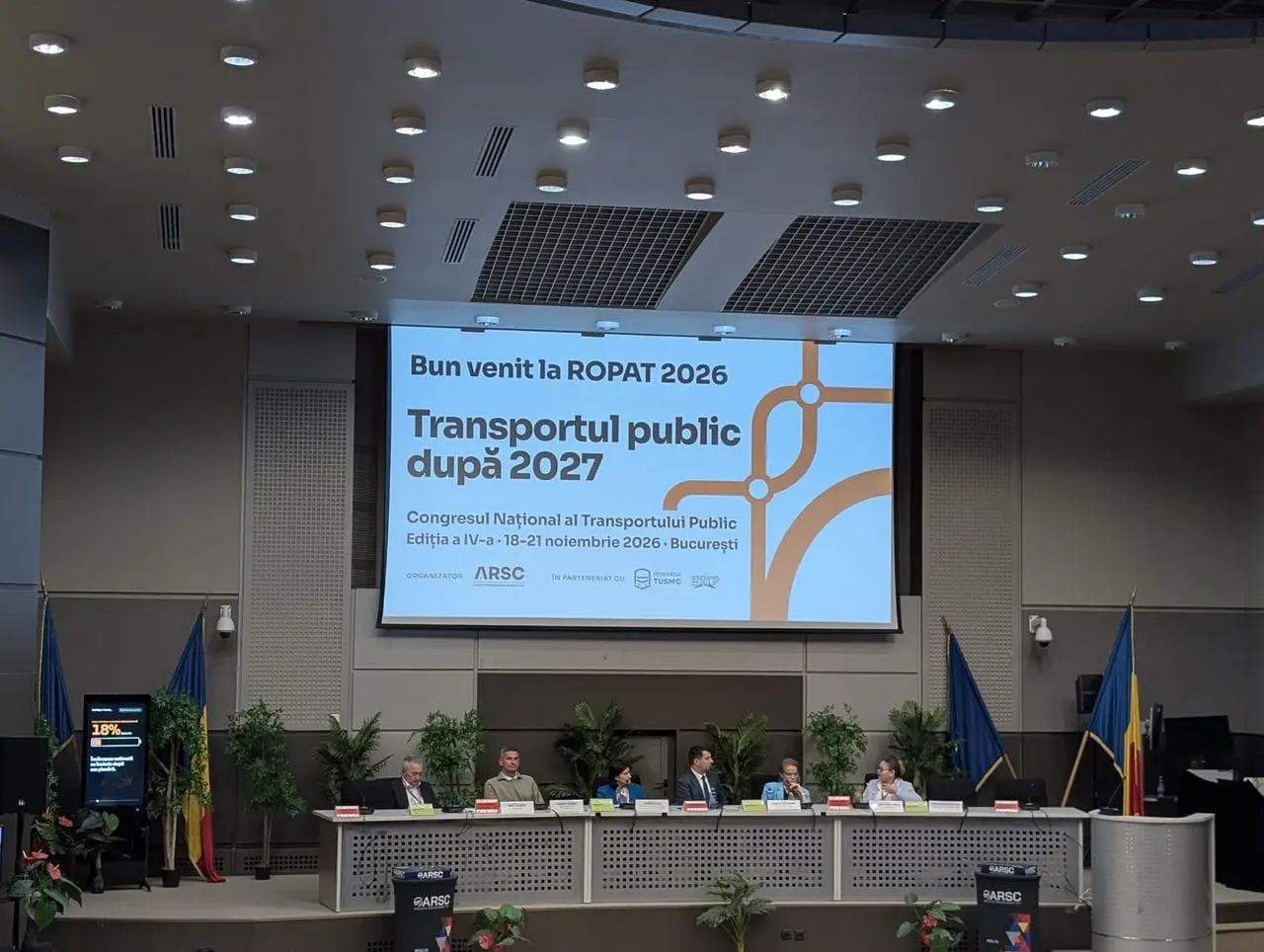
ROPAT 2026 partners
ROPAT 2026 was organised by the Romanian Smart City Association (ARSC) in partnership with the TUSMC Federation (Federation of Urban, Suburban and Metropolitan Passenger Transport Operators), the main partner of this edition, and with URTP, the Romanian Union of Public Transport. KraftSync Transit was the technology partner of the fourth edition. Partners of this edition: nGENERATION, Anadolu Automobil Rom - Green Transport, Banca de Investiții și Dezvoltare, NovaTech, Dahua Technology, CTE Green, Palo Alto Networks, Lenovo, Framinor Grup and DAC.